
IVF for foreigners in Nepal with cost and success rate
Category : blog
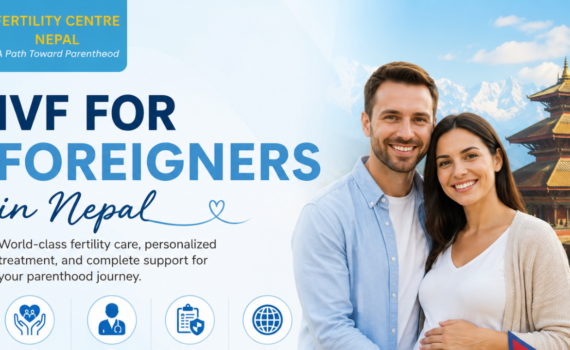
IVF for foreigners in Nepal
In every country, IVF is a life-changing journey for couples or individuals who are struggling with infertility, and you must choose the right clinic for a successful and safe experience. Fertility Centre Nepal is one of the leading names in Nepal’s IVF field. They provide world-class services and person-to-person care for the intended parent
What are the legal regulations for IVF for foreigners in Nepal?
What is the IVF for foreigners in Nepal process?
IVF for foreigners in Nepal process is a different way of having a baby than a natural pregnancy. Let’s go through what is IVf for foreigners in Nepal process.
How is IVF different from natural pregnancy?
In a natural pregnancy, the baby is conceived after intercourse. Fertilisation is a whole process that happens when a man’s semen and a woman’s egg meet inside the woman’s body and successfully merge, and further ends in pregnancy.
There are many stages in it, but of course, pregnancy is the last stop in this race. This is natural fertilisation; it requires no external assistance, as it occurs within the body’s reproductive system.
However, when this so-called natural conception does not happen naturally for any reason, that’s where IVF enters the room.
Unlike natural fertilisation, in IVF, the fertilisation takes place in a glass dish. Meaning the best IVF expert in Nepal takes the semen from a man and an egg from a woman, which meet in this glass dish and successfully merge to form an embryo.
Then this embryo is kept inside an incubator, which mimics the temperature of the human female body, so that the embryo can grow fully outside the body till it is developed enough for transportation to the actual mother’s uterus.
The whole IVF treatment in Nepal is called a “cycle” as it goes through several stages. There are mainly five stages: o
varian stimulation, egg retrieval, fertilisation, embryo culture/ development, and embryo transfer. Because this is a very intricate and emotional journey, you should look for the best IVF expert in Nepal for your IVF treatment in Nepal.
What is the IVF for foreigners in Nepal process?
Let’s go through the IVF treatment in Nepal for foreigners.
- Before you travel
Before you actually travel for IVF for foreigners in Nepal process, there are some things you have to manage. Nepal is very strict about legal aspects, such as for foreigners, you have to submit a marriage certificate which have to prove prove that you are legally married and are a heterosexual couple. Single individuals or lgbtq+ couples are not allowed to access IVF in Nepal.
Second thing is, of course, you have to manage your own original passport and your marriage certificate from your home country. The clinics in Nepal have to legally ensure that they verify these before starting any treatment.
Another thing that you need before actually travelling to Nepal for your IVF treatment is that you have to clarify whether the sperm/egg that are going to be used in the IVF process are genetically yours.
- Initial consultation:
The consultation is the most important thing for foreigners. They, doctors, have to do an initial blood test, like AMH for women and the semen analysis for a man, in their own home country.
And they have to send the email digitally to the IVF expert in Nepal.
And anything you have to make sure is that your female partner’s arrival in Nepal has to be perfectly timed, considering her menstrual cycle, so that the next phase of the IVF for foreigners in Nepal process can be immediately started.
- Important tests
Another type of test which are very mandatory for every foreigner seeking IVF in Nepal is to go through the HIV test, hepatitis B and hepatitis C, and syphilis these test are mandatory safety steps.
- Ovarian stimulation
The first stage is ovarian stimulation. In this phase, the eggs are being prepared. Basically, the best IVF expert in Nepal gives women a lot of medication to produce eggs. Usually, women produce only eggs on a monthly basis. However, these medications make women produce multiple eggs at once. Additionally, experts also give drugs to curb the unnecessary release of these eggs. Only this, the stage cost of IVF for foreigners in Nepal is high.
- Egg retrieval
The next stage is egg retrieval. It is done after 34 to 36 hours, when the final shot is given in the first stage. Now, they will actually retrieve the egg from the ovaries. However, there are still things that are checked, such as hormonal levels and ovarian egg reserves. These tests are done to prevent any kind of complications during the surgery.
The egg is retrieved through minor ultrasound-guided surgery called transvaginal oocyte aspiration (TVOR). This surgery is safely done in just 45 minutes, so patients can go home the same day. In this same stage, sperm retrieval is also performed.
- Fertilisation
The next stage is the fertilisation of gametes. There are conventional methods and the ICSI method. In the first method, both sperm and egg meet in a small Petri dish. Whereas in the ICSI method, only a single healthy sperm is injected into the egg by the injection.
- Embryo culture
If fertilisation methods are successful, the embryo is formed. The doctor will closely determine its status through tests and regular examinations. The next step is to transfer the growing embryo to the incubator, a special laboratory device functioning as an artificial uterus.
The next stage is to let the embryo grow and then transfer it.
During the embryo culture process, there is a chance that there is more than one healthy embryo that has been fertilised. If you choose only one embryo for a transfer. So what actually happens to our remaining embryos?
In the case of IVF for foreigners in Nepal, you can choose embryo freezing, also known as vitrification. In the case of the Nepali citizens, this is handled by the clinical process; however, for foreigners, you must do some kind of legal agreement to ensure that you have given the green light to the clinic about what will happen to those left over embryo.
Or if you just freeze them fully, then you have to make a legal agreement describing for how long, where, and at what cost?
- Embryo transfer
This is the final stage of the IVF for foreigners in Nepal. In this stage, the grown embryo now has to be transferred to the mother. Meaning the embryo has to shift to an actual uterus. The minor surgery is performed for this whole stage. There is a common way this is performed, which is similar to a pelvic exam.
The patient is prepared by having a full bladder. Meaning, a lot of water is advised to drink so the uterus is visible through an ultrasound. The selected embryo is inserted into a catheter, a very thin, flexible tube. This small tube is inserted inside the vagina and passes directly into the cervix’s opening. All of this is guided with the help of the ultrasound in real time. After the catheter is inserted successfully, embryos are gently dropped inside the uterine cavity.
- Post treatment
After the embryo transfer is done, your doctor may prescribe some kind of drugs so that your chances of that embryo actually getting implanted in your uterine lining increase. This phase is about 14 days
After two weeks’ wait, the doctors will take a blood test to confirm if the embryo has successfully implanted or not and resulted in a clinical pregnancy.
Cost of IVF for foreigners in Nepal?
Cost of IVF for foreigners in Nepal
| Process Stage | Cost of IVF for foreigners in Nepal | Cost of IVF for foreigners in Nepal |
| Before You Travel | Varies by home country | Varies by home country |
| Initial Consultation | 1,500 to 3,000 | 12 to 23 |
| Important Tests | 15,000 to 30,000 | 115 to 230 |
| Ovarian Stimulation | 50,000 to 1,50,000 (Based on needed dose) | 380 to 1,150 |
| Egg & Sperm Retrieval | Included in Base Package | Included in Base Package |
| Fertilisation | Base IVF: 3,00,000 to 4,50,000
ICSI Extra: 50,000 to 1,00,000 |
Base IVF: 2,250 to 3,400
ICSI Extra: 380 to 750 |
| Embryo Culture | Included in Base Package | Included in Base Package |
| Embryo Freezing | 30,000 to 60,000 (Includes 1st year storage) | 225 to 450 |
| Embryo Transfer | Included in Base Package | Included in Base Package |
| Post-Treatment | 15,000 to 30,000 (Medication + Test) | 115 to 230 |
When combining these elements, a foreign couple should budget a Grand Medical Total of 4,10,000 to 6,90,000 (3,100 to 5,200 USD) to cover all treatment phases, diagnostic screenings, and required hormones. This does not include personal travel expenses, flights, or hotels in Kathmandu.
Cost of IVF for foreigners in Nepal 2025
| Treatment Stage / Medical Component | Cost of IVF for foreigners in Nepal 2025 | Cost of IVF for foreigners in Nepal 2025(USD) |
| Pre-Treatment Screening & Mandatory Tests | 15,000 to 25,000 | 115 to 190 |
| Ovarian Stimulation Medications | 50,000 to 1,20,000 | 380 to 900 |
| Base IVF Cycle (Retrieval, Culture, Transfer) | 3,00,000 to 4,50,000 | 2,250 to 3,400 |
| ICSI Procedure (Add-on) | 50,000 to 70,000 | 380 to 530 |
| Embryo Freezing (Vitrification – 1 Year) | 30,000 to 50,000 | 225 to 375 |
| Post-Transfer Drugs & Pregnancy Test | 15,000 to 25,000 | 115 to 190 |
| Total Package Range | 4,10,000 to 6,45,000 | 3,080 to 4,850 |
Cost of IVF for foreigners in Nepal 2026
The cost of IVF for foreigners in Nepal, 2026, consists of several factors, such as medical cost and then medical costs.
The whole IVF treatment cost for a foreigner per stage.
| Treatment Stage / Medical Component | Cost Range (NPR) | Cost Range (USD) |
| Pre-Treatment Screening & Mandatory Tests | 18,000 to 30,000 | 135 to 225 |
| Ovarian Stimulation Medications | 60,000 to 1,50,000 | 450 to 1,125 |
| Base IVF Cycle (Retrieval, Culture, Transfer) | 3,40,000 to 4,80,000 | 2,550 to 3,600 |
| ICSI Procedure (Add-on) | 55,000 to 85,000 | 410 to 640 |
| Embryo Freezing (Vitrification – 1 Year) | 35,000 to 60,000 | 260 to 450 |
| Post-Transfer Drugs & Pregnancy Test | 18,000 to 30,000 | 135 to 225 |
| Total Package Range | 4,71,000 to 7,50,000 | 3,530 to 5,625 |
Of course, for the cost of IVF for foreigners in Nepal, we have to consider other things like non-medical travel and living costs. Because IVF treatment is a long process, you have to stay in the country for roughly 15 to 20 continuous days.
Accommodation: The city that we are going to consider for this whole requirement, of course, is Kathmandu, 700 to 100 for a total of 20 days.
Food: Next, we have the food, which is going to cost you around 400 to 800 dollars for the full 20 days.
Travel: If you are using transport, like if you are using private apps for your transportation, it will cost you around 450 dollars.
Other utilities: As for the other utilities, like local tourist SIM cards or any high-speed data, or any kind of drinking water, it is a one-time cost, and it would cost you around something at 30 to 50 to 60 dollars.
Visa: Another thing is like a 30-day tourist visa, which is like a one-time cost for one person, which is something like 100 for both of the adults.
So the total cost of your non-medical costs in Nepal is somewhere around 1000- 4000 dollars
| Cost Category | Daily Expense (Avg) | 20-Day Total Cost (NPR) | 20-Day Total Cost (USD) |
| 1. Hotel / Accommodation | 4,600 to 8,000 | 92,000 to 1,60,000 | 700 to 1,200 |
| 2. Clean & Safe Food | 2,600 to 5,300 | 52,000 to 1,06,000 | 400 to 800 |
| 3. In-City Transportation | 1,300 to 2,600 | 26,000 to 52,000 | 200 to 400 |
| 4. Essential Utilities | One-time costs | 4,000 to 6,500 | 30 to 50 |
| 5. 30-Day Tourist Visa | One-time cost per person | 13,300 (For both) | 100 (Total for 2 adults) |
| Non-Medical Subtotal | 9,400 to 18,500 | 1,87,300 to 3,37,500 | 1,430 to 2,550 |
Cost of IVF for foreigners in Nepal in the government hospital
Success rate of IVF for foreigners in Nepal?
| Age Group | Success rate of IVF for foreigners in Nepal |
| Under 35 | 50% to 60% |
| 35 to 37 | 45% to 50% |
| 38 to 40 | 25% to 35% |
| Over 40 | 10% to 15% |
The Success rate of IVF for foreigners in Nepal is actually based on many factors, such as individual needs and how much treatment you need. But in general terms, the overall Success rate of IVF for foreigners in Nepal ranges from 50% to 65% per cycle.
Let’s go through these by two different categories: The Success rate of IVF for foreigners in Nepal could be measured by the age group, and it could also be measured by the kind of treatment you are getting.
If you’re under 35, your chances of having a successful outcome are 50 to 60%. After the age of 35, it starts to deteriorate by 50% to 45%. By the time you reach 38 and 40 years of age, your chances of success have already dropped by 25 to 35%. The rates for the decline over the age of 40 are 10% to 15% when using your own eggs.
| Treatment Type | Success rate of IVF for foreigners in Nepal |
| IVF with Donor Eggs | 70% to 85% |
| IVF with ICSI | 55% to 65% |
| Frozen Embryo Transfer (FET) | 50% |
Now, let’s go to the treatment types. There are very different types of treatment in IVF. If you are doing the IVF with donor eggs, the success rate of IVF for foreigners in Nepal is 70% to 85%, because the donor eggs are usually donated or retrieved from a very young candidate.
So the success rate of IVF for foreigners in Nepal, if you actually have a child, increases by that.
The second type is IVF with the ICSI method. IVF is done through this method when just one healthy sperm is injected into a healthy egg. The chances of IVF success in Nepal have increased from 55% to 65%, and this is also more successful than regular IVF.
The Frozen embryo transfer, also known as FET, has a 50 to 55% success rate.
Factors that affect the Success rate of IVF for foreigners in Nepal
- There are factors which we have to consider before actually thinking about the successful treatment. Even though the success rates we have discussed with you are mentioned, there are many factors at play. One of them is what causes infertility. There are thousands or millions of things which can go wrong in your body. And they could challenge your goal to have a child.
- So doctors, when they actually do the initial consultation, they make sure to know what kind of fertility issue you’re having. If you have a blocked fallopian tube, it would depend on what kind of treatment you will get and what kind of chances you will have.
- For example, let’s say that you have PMOS. In PMOS, the cost of the treatment increases and the chances are low because the body of the woman during PMOS is already on a high alert mode. And during the ovarian stimulation phase, doctors might not want to actually stimulate your ovaries longer.
- In pregnancy history, there are studies which have shown that women who have had a successful previous pregnancy are more likely to have a successful IVF treatment.
- There is a clear difference between the pregnancy and live birth rates. The success rates which we have discussed now are the successful fertilisation and transfer of the embryo which was created in the lab. It does not mean that you would have a successful pregnancy; these are two different terms. A thousand things could go wrong after the successful embryo transfer. Maybe after 2 or 3 weeks, your body can kill the implanted embryo. So ask for live birth rates, not just success rates.
Can foreigners afford fertility treatment in Nepal?
Yes, but under legal regulations. Let’s go through the Nepal Civil Code and the Ministry of Health operation directives. IVF is a legal treatment which is considered a medical solution for the illegal recognition of a family unit. According to Nepali law, to access treatment, the foreigner must have all the legal documents. Below is the list of all important things.
The intended parents should be married and a heterosexual couple. You must provide an official registered marriage certificate from your own home country. Any single individual, unmarried couples or any other lgbtq + couples are not allowed to access IVF in Nepal.
Another thing is that, according to the law, only a 100% genetic connection between the baby and the parents is permitted by the law. Any third-party gamete donation is completely banned.
Another thing which comes to the minds of the people is whether surrogacy is possible via IVF treatment for foreigners in Nepal?
The answer is NO, surrogacy is 100% illegal for foreigners, even for Nepali citizens, in Nepal. Not even commercial surrogacy is legal.
What documents do we have to submit for IVF for foreigners in Nepal?
- AMH for women and the semen analysis for a man,
- an official registered marriage certificate from your own home country
- HIV test, hepatitis B and hepatitis C, and syphilis these tests are mandatory safety steps
Best IVF doctor in Nepal for foreigners
| Specialist Name | Clinic Name | Detailed Location |
| Dr Sanu Maiya Shrestha | Creator’s IVF Nepal | 3rd Floor, Anu Books Store Building, Satdobato, Lalitpur |
| Dr. Usha Karki | National IVF Centre | 4th Floor, Jyoti Bhawan, Kantipath (Jamal), Kathmandu |
| Dr. Pratikshya Pandey | Vatsalya Natural IVF | Narayanchaur, Naxal, Kathmandu (Branch also available in Bhaktapur) |
| Dr. Neha Homagai | Indira IVF Nepal | 3rd Floor, IME Complex (Adjacent to Global IME Bank), Panipokhari, Kathmandu |
| Dr. Manisha Acharya | Indira IVF Nepal | 3rd Floor, IME Complex (Adjacent to Global IME Bank), Panipokhari, Kathmandu |
| Dr. Nikita Dhakal | Slavica IVF & Research Centre | Maharajgunj, Kathmandu |
| Dr. Mira Thapa | Angel Fertility Clinic | Chundevi, Kathmandu |
| Dr. Anupama Suwal | Venus Hospital | Mid-Baneshwor, Kathmandu |
| Dr. Neelam Sah | Sishu Fertility Clinic | Bharatpur (Chitwan) & Ghorahi (Dang) |
| Dr. Silpa Panta | Sishu Fertility Clinic | Bharatpur (Chitwan) & Ghorahi (Dang) |
Renowned fertility specialist Dr Neelam Bhise has vast knowledge of IVF, IUI, and other fertility procedures. She is famous for handling complicated infertility problems with compassion and effectiveness; that’s why she comes first as the Best IVF doctor in Nepal.
Dr Neha Gupta is the best IVF expert in Nepal with a solid reputation for effective care. Dr Gupta is renowned for her ability to provide individualised care and manage high-risk reproductive issues.
Leading fertility specialist Dr Gunjan Kacker is another of the best IVF experts in Nepal, focusing on assisted reproductive technologies, such as egg donation and IVF. She is renowned for her compassionate approach to patient care and outstanding fertility treatment outcomes.
Dr Deeksha Tyagi: Known for her comprehensive approach to infertility, Dr Tyagi has years of experience in reproductive medicine and is proficient in various fertility therapies.
Best IVF centre in Nepal for foreigners
Fertility Centre Nepal is a chain of fertility clinics that aims to provide the best possible infertility treatments and their related services across Nepal and to foreigners as well. It has been providing its services across Nepal in prominent cities like Kathmandu, Biratnagar, and Nepalgunj for a long time, making the patients feel satisfied with the treatments and thus making the team also feel satisfied to deliver the best results, which is the main motto of the FCN.
Fertility Centre Nepal has a team of highly experienced IVF doctors who are among the best IVF doctors in Nepal. Not only this, they have very advanced technology and facilities. In Nepal, IVF is not just a medical treatment; it is also a matter of the state and the court. Fertility centre Nepal actually assures complete compliance with Nepali law, and they include proper documentation and any kind of contracts.
Choosing the Right Fertility Specialist
In every country, IVF is a life-changing journey for couples or individuals who are struggling with infertility, and you must choose the right clinic for a successful and safe experience. Fertility Centre Nepal is one of the leading names in Nepal’s IVF field. They provide world-class services and person-to-person care for the intended parent.
Frequently asked questions
- What factors affect the pricing of IVF treatment in Nepal?
- Imported brands: Now, this is the biggest reason as to why every city’s pricing is different. Nowadays, many clinics that offer international services, such as the Go IVF surrogacy clinic, offer medicines that are most of the time imported from abroad. Whereas cities that are very domestic and local, they offer medicine manufactured in India itself. and imported goods are significantly expensive due to various tax regimes, whereas in domestic healthcare products, this is not the case; they are comparatively less costly.
- Patient’s health demographic: The patient’s needs also determine the cost of the treatment. Various patients who are young, between 20 and 30, actually do not need much of the medications. On the other hand, patients who are very old need more injections or shots to cover the whole treatment.
- Clinic location and fees: Clinic location makes the biggest difference; you can notice that everything is comparatively more expensive in cities than in local areas. Rents, utilities, expenses, needs, and wants are higher in cities, so charges in India are higher.
- Typical package rate: Every doctor, clinic, and hospital has its own charging rate for IVF in India. It also depends on their rates, locations, and many other factors, such as what facilities they are providing.
- What are the best cities for IVF treatment?
Being a parent is a joy in life that not everyone is lucky enough to experience, from being infertile to not being ready right now. In a part of the world, a seventy-year-old lady gave birth to a baby. In some parts, young couples still dream of having their first baby. There could be many reasons for having a baby. Every person is going on their own journey. But there is one thing common in those cases: the desire to have a baby. And what is the use of this advanced technology if it cannot fulfil people’s desires and dreams? However, the impossible seems possible now, through IVF.
The best cities for IVF treatment in Nepal are Kathmandu, Pokhara, Biratnagar and Nepalganj.
- Is IVF legal in Nepal?
Yes, IVF is legal in Nepal, but it’s regulated and must be offered only by officially licensed centres approved by the Ministry of Health and Population (MoHP). Nepal’s current regulations allow IVF, ICSI, and egg/sperm donation for married couples. Also, surrogacy is banned, and there are no clear laws governing aspects such as donor anonymity, commercial fees, or offspring tracking.
While many clinics offer IVF services, most are not registered or certified by the health ministry. Patients are advised to choose only clinics that adhere to the government’s safety and ethical standards. IVF services allowed in Nepal include:
- In-vitro fertilisation (IVF)
- ICSI (Intracytoplasmic Sperm Injection)
- Egg and sperm donation (within limits)
- How can I increase my chances of success?
You can increase your chances of IVF chances of success. With Cost and by making small changes in your lifestyle, such as eating the Mediterranean diet, maintaining a healthy weight and height ratio, and low-impact exercises, have a sleep, manage stress and avoiding smoking and alcohol.