
The myths of Sperm Donation -Fertility Centre Nepal
Category : blog
Sperm Donation in Nepal: Common Myths and the Facts You Should Know
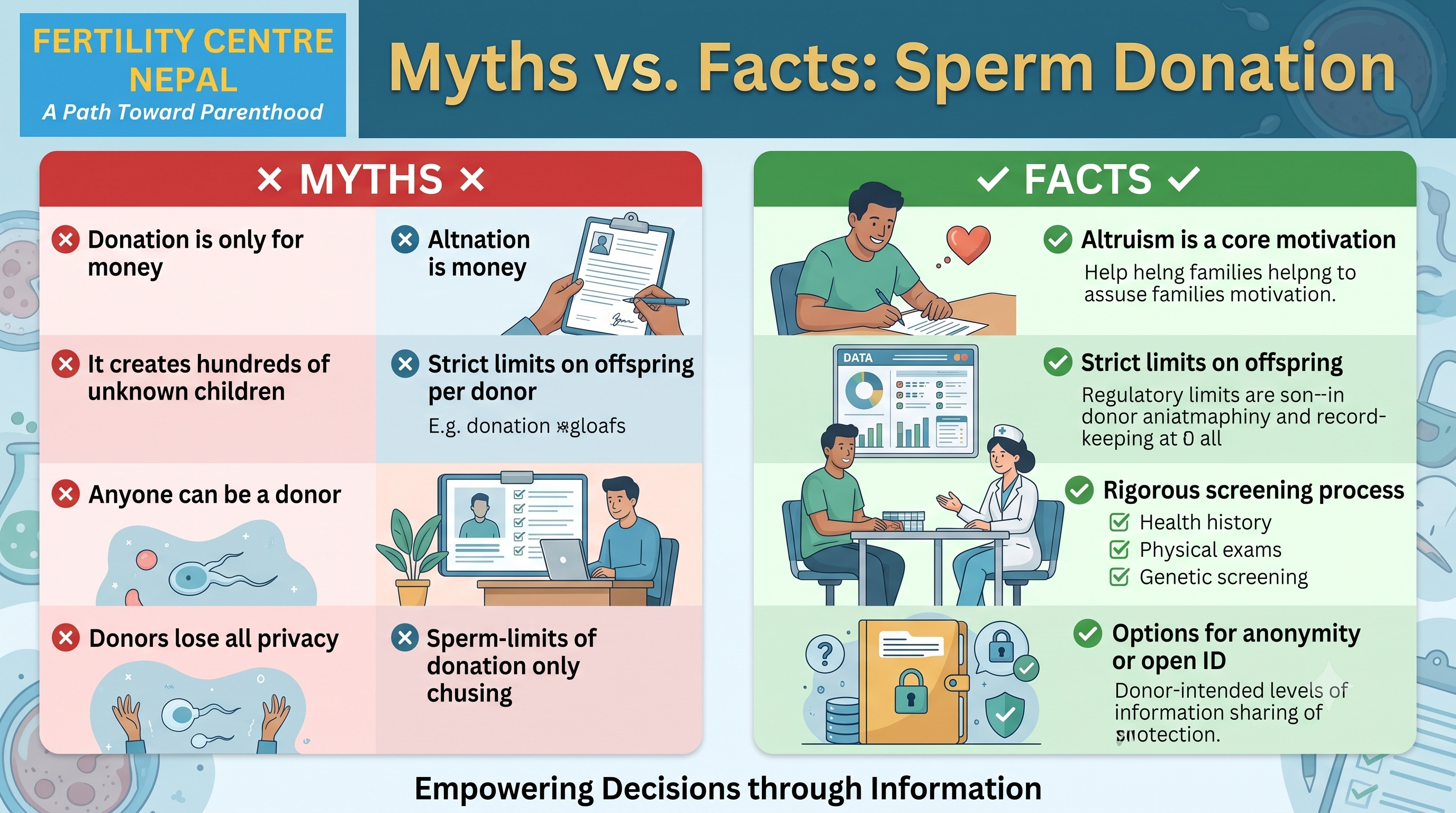
Sperm donation can play a role in helping people and couples who want to have a baby but need donor sperm. There are many wrong ideas and fears about sperm donation that often stop people from getting the right information.
At Fertility Centre Nepal we think it’s important to know the truth. When you understand the facts you are better able to make choices about your fertility journey. In this blog we take a look at some of the most common myths about sperm donation, in Nepal.
Sperm donation typically involves the provision of sperm by a healthy heterosexual man to a sperm bank or fertility clinic for the purpose of artificially inseminating a woman who is not his sexual partner. Most recipients of donor sperm are heterosexual couples dealing with male infertility, lesbian couples and single women. Sperm donors get paid for their samples, but there are numerous qualifications to meet before a sperm bank or fertility clinic accepts the donor as a client.
Bring sperm donation up in conversation and it will almost certainly be met by sniggers. You can almost see the mental image forming in the person’s head : overweight, sweaty perverts in a grubby room somewhere. It’s not like that at all. Whatever the individual sperm donor’s sexual predilection may be, it has nothing to do with why they’re donating. We’re donating because we want to help. Some of us have personal reasons.
What Is Sperm Donation?
Myths Sperm Donation
Sperm donation is a process where a healthy male donor gives sperm to help people or couples who are trying to have a baby. The donated sperm is used in fertility treatments like insemination (IUI) or in vitro fertilization (IVF). The choice of treatment depends on the situation of the person or couple seeking help.
The American Society for Reproductive Medicine (ASRM) says that sperm donation can be an option when there are serious issues with sperm like very low sperm count or no sperm at all. It may also be used when there are concerns or when a woman is pregnant without a male partner.
It’s important to know that donor sperm is not just collected and used away. Reputable sperm donation programs follow rules. They check the donors history do physical exams test, for infections and look at genetic risks. These steps are all part of a screening process. The goal is to make sure the sperm is safe and to lower the risk of passing on diseases or health problems.
Basically there are three kinds of people who are looking out for your sperm.
1. Straight Couples Facing Infertility – If a married couple is not able to procreate because of infertility or other medical reasons then they look out for sperm donors.
2. Single Women – Second category is of single women. These women don’t want to get married but they want to experience parenthood so they seek sperm donors.
3. Lesbians Couples – The third interesting group of people that seek sperm donors are lesbians couples. Two women are married to each other and they want a baby then they look for sperm donors.
You may undergo some test before donating sperm. You should be free of diseases. You’ll also have to provide details about your family members. Your lifestyle will also be analyzed. The authorities will check your family history for chronic and genetic diseases. In case you are likely to have an inherited disease, you’ll be rejected. You will be given a request form for your tests. These tests are required as part of the routine screening process necessary to donate sperm. You will need to get the tests completed so the results are available at your medical check-up. You are also required to provide urine samples throughout the donation process. Any results from your medical check-up and blood tests will be given to you by your specialist or fertility coordinator.
Clinics and donors alike are essentially standing for personal choice. The Success rate of the pregnancy by using sperm donation is depending on the many factors like age and health of the recipient. The success rate also depends on the donor sperm count if the sperm count is good chances of getting pregnant are more.
What Should You Ask Before Choosing Donor Sperm?

IVF nepal
Before proceeding patients should have an opportunity to ask questions about donor screening, donor testing donor infectious‑disease testing, donor semen quality, donor identification and information policies, donor storage and transportation donor treatment options, donor consent, donor costs donor legal considerations and donor future medical information and updates. I have spoken with families who say that knowing these details helps them feel confident about the donor they choose.
Donor screening
Genetic testing
Infectious‑disease testing
Semen quality
Donor identification and information policies
Storage and transportation
Treatment options
Consent
Costs
Legal considerations
Future information and donor updates
The importance of ongoing donor information is also illustrated by established sperm banks. Fairfax Cryobank for example has a donor medical‑status system through which clients can receive information when a donor’s medical status changes.
Sperm Donation in Nepal: Choose Information Over Myths
The internet can give information but it can also spread confusing or wrong ideas. Questions about redheads giving blood gingers giving plasma egg donation and hair color and sperm donor payment often get mixed up even though these are medical topics.
The important thing is simple: being a sperm donor depends on medical, genetic, reproductive and program rules—not on internet myths about hair color or looks.
At Fertility Centre Nepal, people and couples thinking about using donor sperm can talk about their fertility issues with trained doctors. Learn about the treatment options. Whether donor sperm is right for IUI, IVF or another fertility treatment should be decided through a medical check.
If you are looking for a sperm bank near me, in Nepal it is important to make sure the service follows medical checks, tests, storage, consent and record keeping procedures